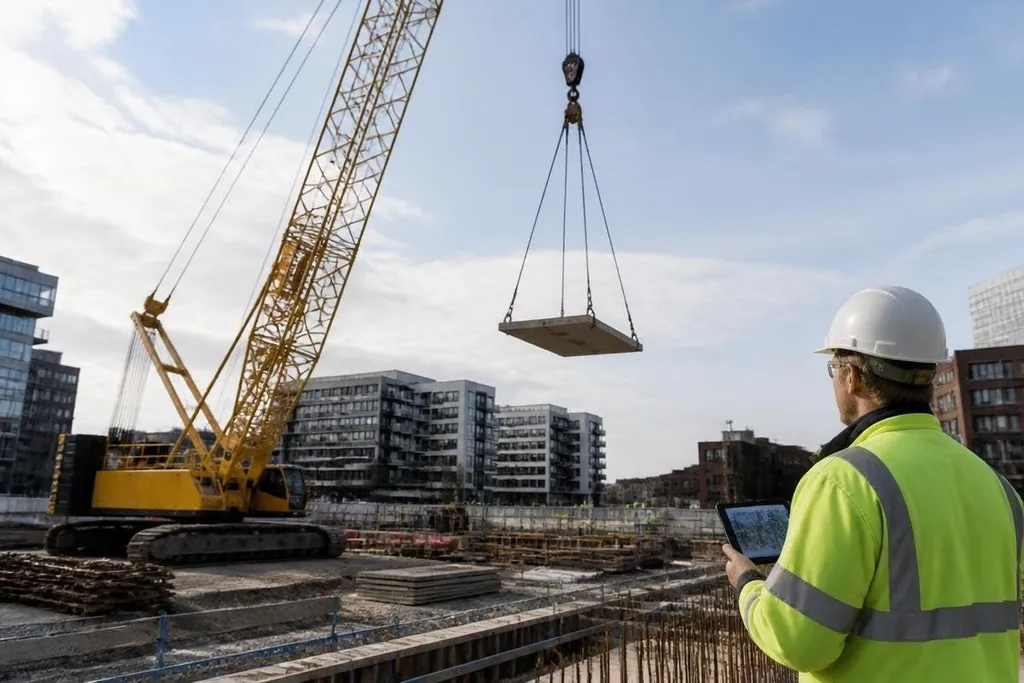
A crane can repeat a planned lift with little human input. A fully autonomous crane would also need to read the work area, judge changing risks, and stop when the plan no longer fits. That second job is the difficult one.
- The easy part: repeat a known path with fixed loads.
- The hard part: identify people, vehicles, wind, and unexpected objects.
- The open issue: decide when a human must take control.
What full autonomy would require
Moving a hook from one point to another is only part of the job. The crane must control load motion, keep the hook and load within safe limits, and react when the load swings or the path becomes blocked.
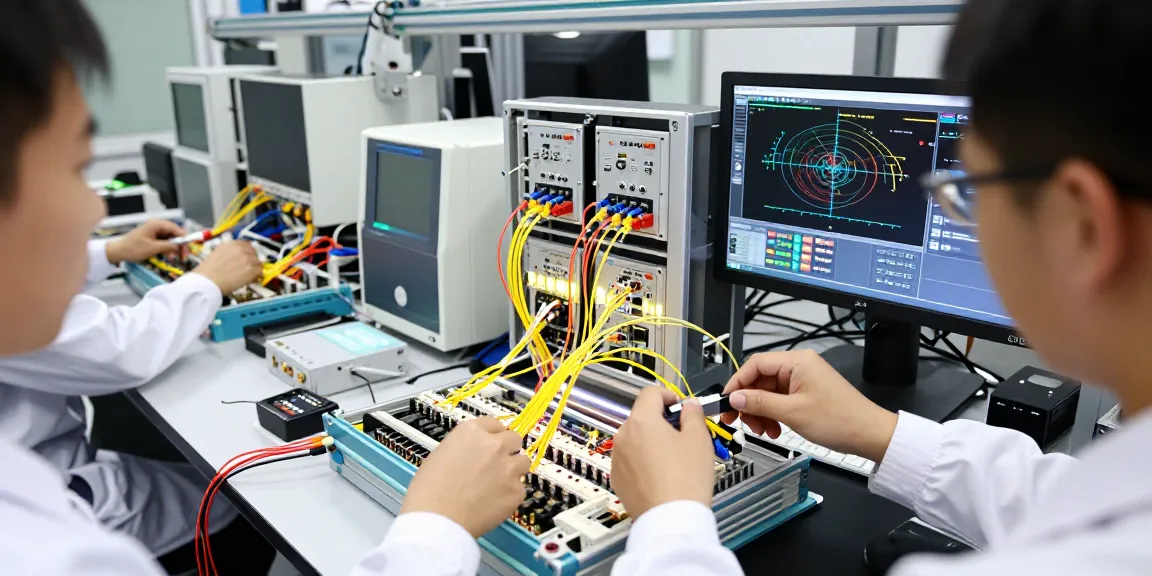
Sensors could give the control system a view of that work area. Cameras can detect objects, while LiDAR measures distance by sending out laser pulses. Load sensors can report weight, and position sensors can track the boom, trolley, hook, or other moving parts.
The system would then compare those readings with the lift plan. If the load is too heavy, the hook is in the wrong place, or a person enters the work zone, the crane should stop and ask for help rather than continue the motion.
That last choice matters more than smooth movement. Too many pauses may slow a site, but continuing with poor information can damage equipment or injure someone.
Why the work area changes the problem
A factory can give a crane a marked floor, fixed pickup points, known loads, and controlled access. On a construction site, materials, workers, vehicles, and temporary barriers can move during the same shift.
Weather adds another source of uncertainty. Wind can move a suspended load, reduce camera quality, and affect whether a lift remains within the approved plan. Rain, dust, glare, and darkness can also make sensor readings less useful.
The crane must understand what its sensors cannot confirm. A camera may see an object without knowing whether it is a loose tool, a cable, or a person partly hidden behind a load.
That uncertainty leaves a remote operator or nearby supervisor with a clear job: stop the lift when the sensors can't separate a cable from a person. Reports on autonomous crane trials can tie claims about working sites to the machine, lift, sensor setup, and human handoff.
Where autonomy is more likely to work first
The first useful systems will probably handle narrow jobs with clear limits. A port crane moving containers between known zones has a more predictable task than a tower crane placing irregular materials on a changing building site.
Indoor production sites also give automation a better starting point. The system can use fixed maps, marked routes, known machines, and access rules that change less often than they do outdoors.
Remote supervision may become the normal middle ground. One person could watch several cranes, review alerts, and take control when a sensor reading does not match the lift plan. That setup still needs clear rules for who has control and how fast they can stop a motion.
I'd treat a crane as fully autonomous only when it can explain why it started, paused, or rejected a lift under changing site conditions.
The limits buyers should test
A product label won't answer the main questions. Ask for the operating conditions, the safety logic, and the point where a human must step in.
Crane autonomy checklist
- Map the work area: ask how the system handles new objects, blocked paths, and changed pickup points.
- Test sensor failure: check what happens when a camera is dirty, a position sensor stops reporting, or LiDAR loses part of the scene.
- Check load control: ask how the system detects swing, overload, a stuck load, or a change in the load's position.
- Set human control: confirm who can stop the crane, how they take control, and what happens after an emergency stop.
- Review the logs: require records of sensor warnings, rejected lifts, manual takeovers, and system faults.
- Define the boundary: write down the weather, lighting, load types, and work areas where autonomous operation is allowed.
These checks also show why a fully autonomous crane is not one feature that a maker can switch on. It is a set of sensing, control, safety, and site rules that must work together under conditions the system cannot fully predict.
For now, cranes are more likely to gain autonomy in bounded tasks than across an entire changing worksite. The next useful proof will be a long operating record showing how often the system stops, why it stops, and how much human supervision each lift still needs.